The Complete Business Insurance Guide for 2025
Why Every Business Needs Insurance
Running a business without insurance is like driving without a seatbelt. Most of the time, nothing happens. But when it does, the consequences are catastrophic. A single lawsuit, workplace accident, or fire can bankrupt an uninsured business overnight.
Beyond protection, many business insurance types are legally required. Most states mandate workers compensation coverage for employees. Clients and landlords routinely require certificates of insurance (COIs) before signing contracts or leases.
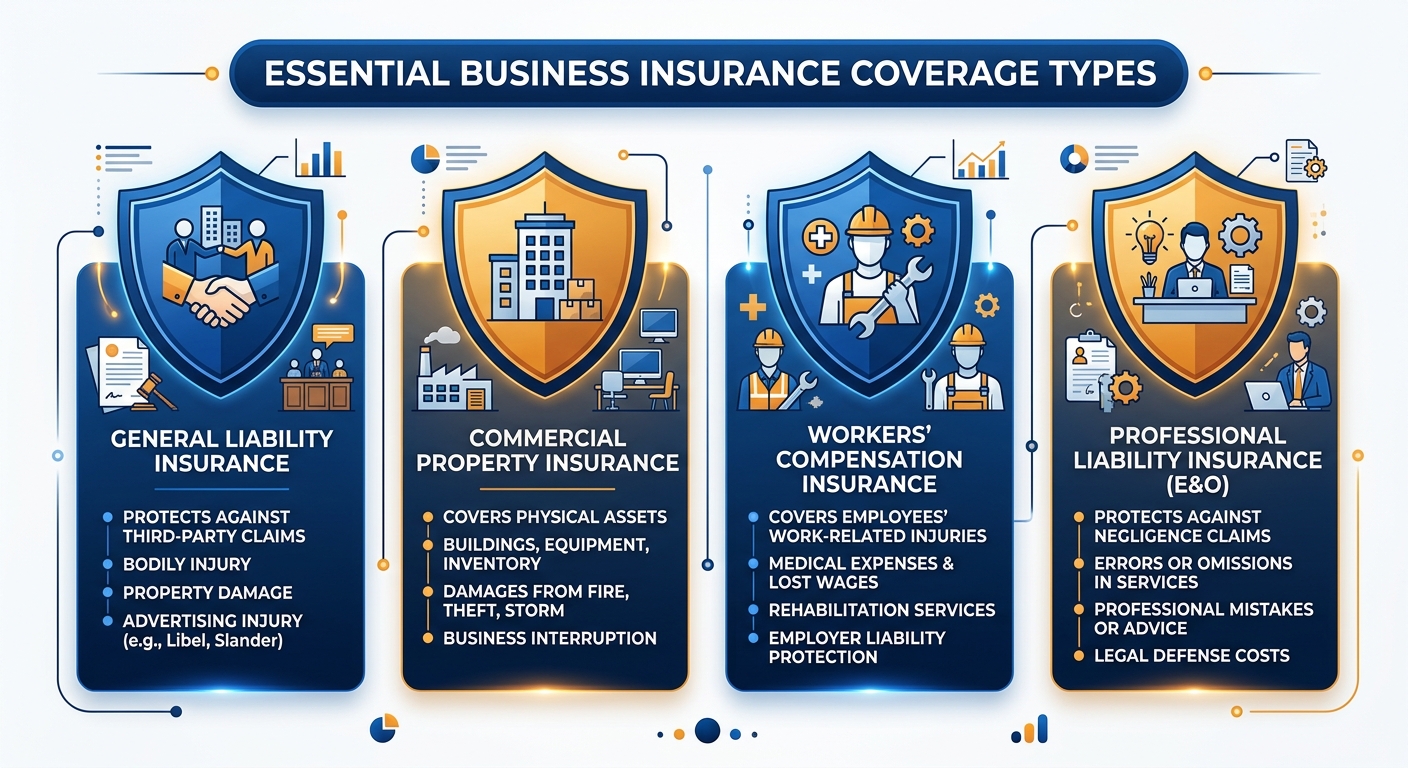
The Core Business Insurance Types
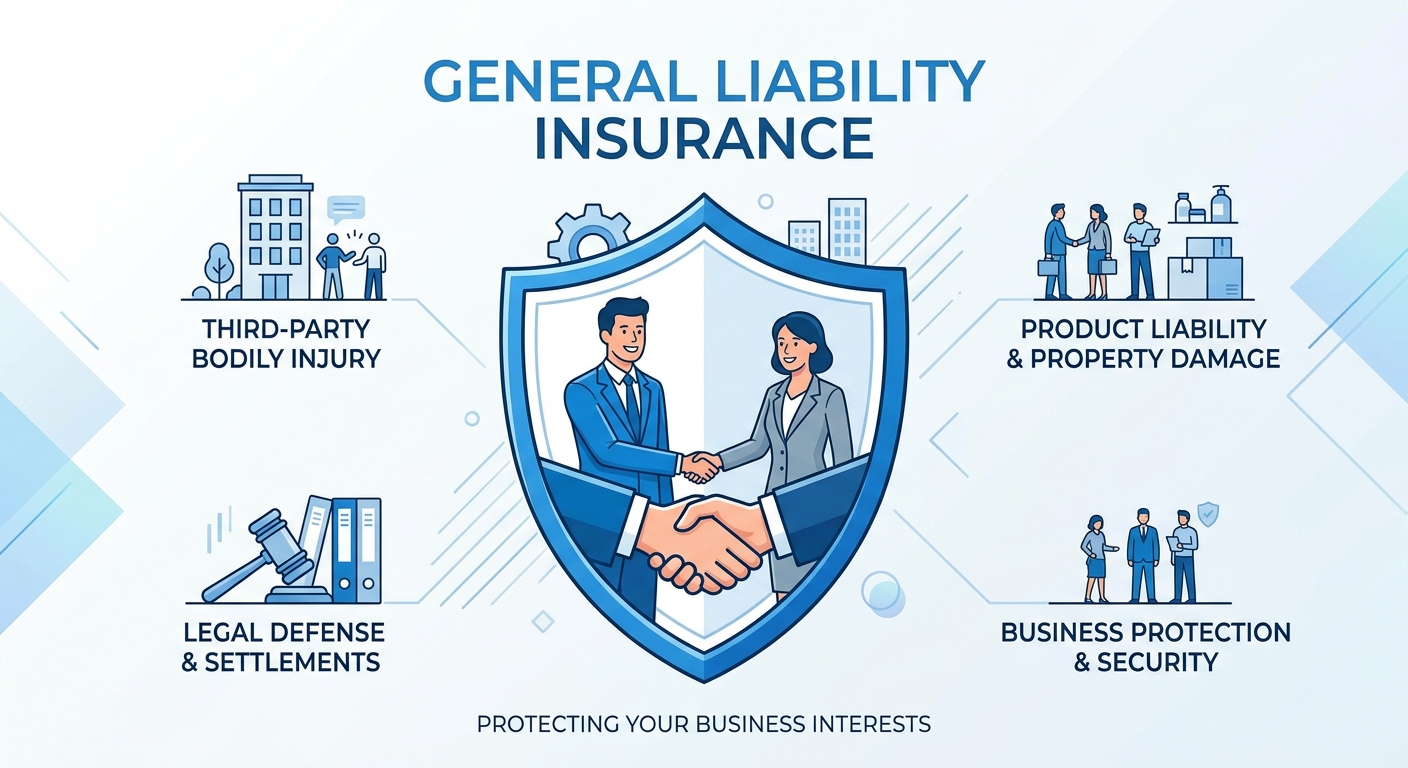
General Liability Insurance The foundation of any business insurance program. GL covers bodily injury and property damage you cause to third parties, as well as advertising injury (libel, slander, copyright claims). If a customer trips at your location, or you accidentally damage a client's property while working on their site, GL responds.
Typical limits: $1M per occurrence / $2M aggregate. Cost: $500–$1,500/year for most small businesses.
Commercial Property Insurance Covers your building, contents, equipment, and inventory against perils like fire, theft, vandalism, and storm damage. If you lease your space, you still need property coverage for your business personal property (furniture, computers, tools, inventory).
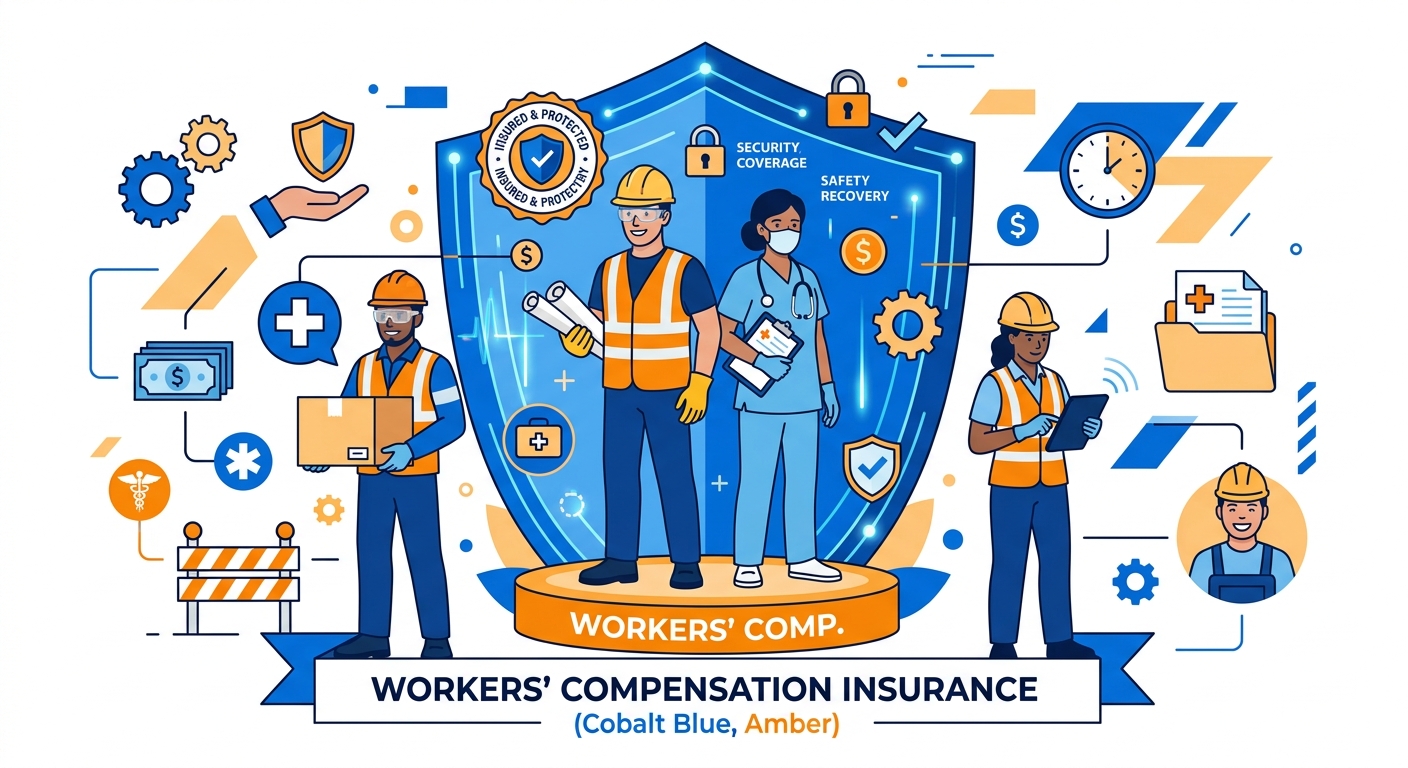
Workers Compensation Required in 48 states if you have employees (Texas and a handful of others allow opt-out). Covers medical bills and lost wages for employees injured on the job, regardless of fault. It also protects you from employee lawsuits over workplace injuries.
Business Owners Policy (BOP) A bundled package that combines GL and commercial property at a discount. Designed for small-to-medium businesses with fewer than 100 employees and revenues under $5–10M. Most affordable entry point for comprehensive protection.
Professional Liability (E&O) Essential for service providers — consultants, accountants, architects, IT professionals, designers, and any business that provides advice or expertise. Covers claims that your work caused a client financial harm, even if you did nothing wrong.
Commercial Auto Insurance Any vehicle used for business — even occasionally — should be on a commercial policy. Personal auto policies typically exclude business use. Covers owned, leased, and non-owned vehicles used by your business.
How Much Does Business Insurance Cost?
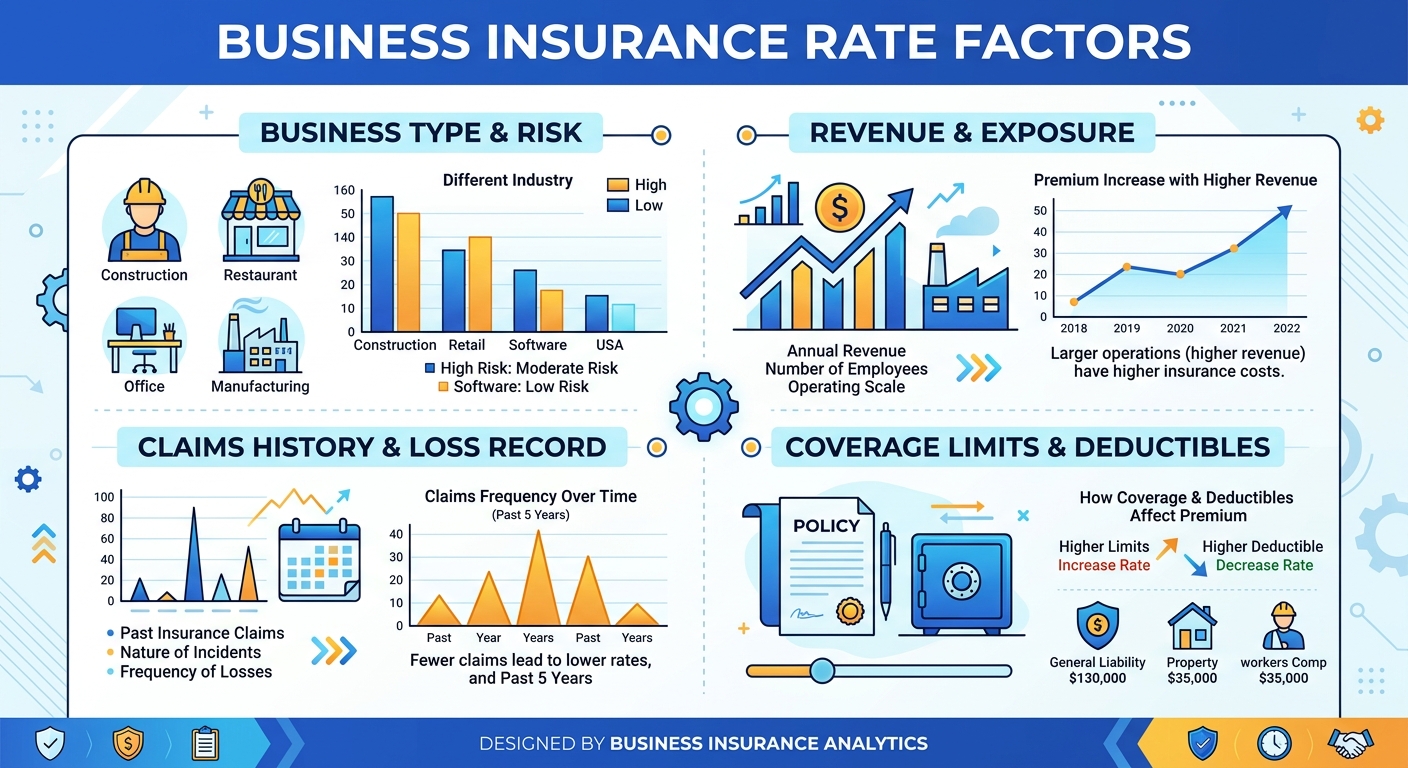
Cost varies significantly by industry, revenue, payroll, claims history, and location. General benchmarks:
- General Liability: $500–$3,000/year for most small businesses
- •BOP: $1,000–$4,000/year
- •Workers Comp: 1–5% of annual payroll (varies widely by industry)
- •Professional Liability: $800–$3,000/year
- •Commercial Auto: $1,200–$2,500/year per vehicle
How to Get the Right Coverage
1. Identify your exposures. What could go wrong in your specific business? Employee injuries? Client lawsuits? Property damage? Theft? 2. Check your contracts. Clients, landlords, and lenders often specify required coverage types and limits. 3. Get multiple quotes. Prices vary significantly between carriers. An independent agency (like CCA) shops multiple carriers for you. 4. Don't underinsure to save money. An occurrence limit too low for a lawsuit is worse than no coverage. 5. Review annually. As your business grows, your coverage needs change.
Working with an Independent Agency
Independent agencies like Contractors Choice Agency aren't tied to a single carrier. We shop your risk across multiple A-rated national carriers to find the best combination of coverage and price. And because we know the commercial insurance market, we spot gaps that online tools miss.
Call 844-967-5247 for a free consultation and same-day quote.
Ready to get covered?
Get a free, no-obligation quote in minutes. Licensed in all 50 states.