How insurance claims
actually work
From incident to settlement, every step of the claims process explained. Know what to expect before you need to file — and what to do (and not do) to maximize your outcome.
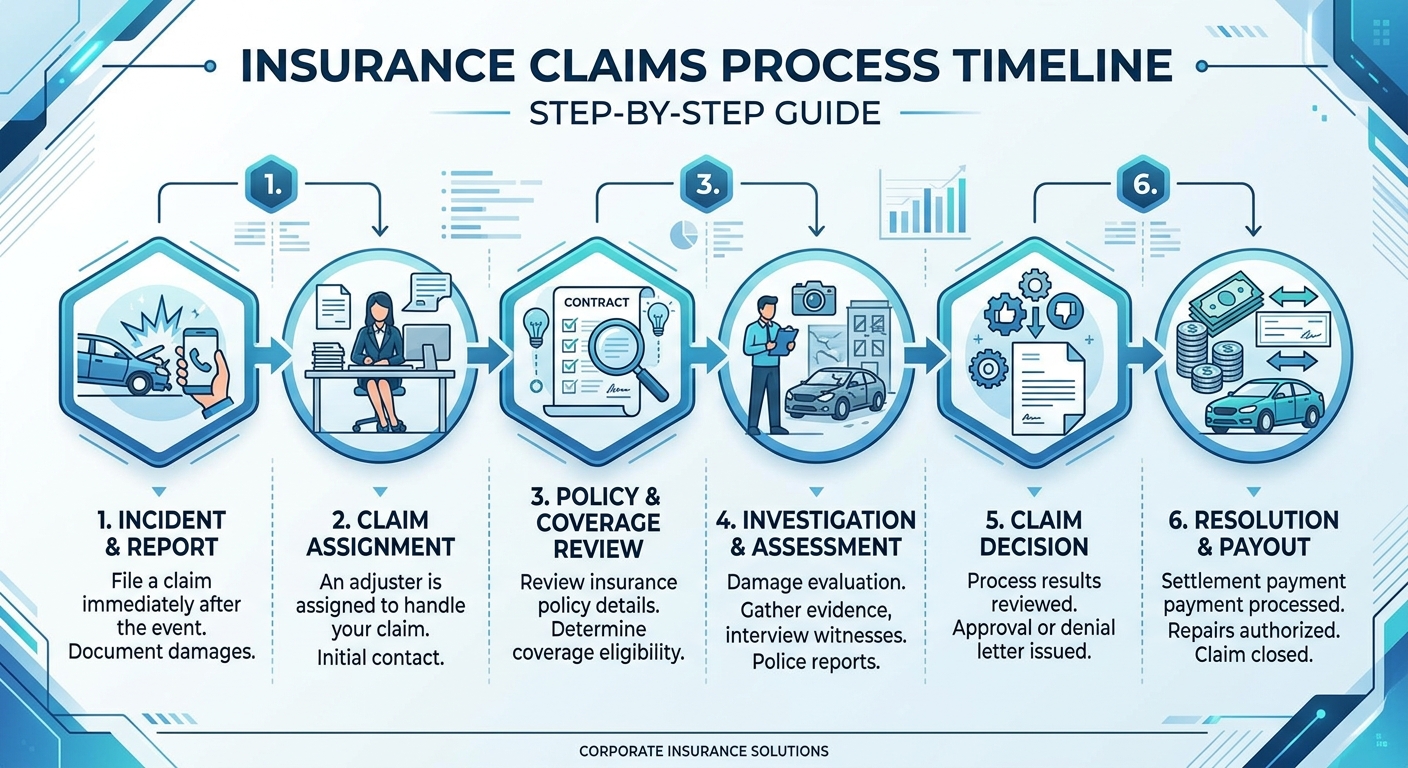
The 6-step claims timeline
Incident occurs
An accident, theft, injury, or lawsuit triggering event takes place. Document everything: photos, witness information, police reports if applicable. Time-stamp your records.
Report to your carrier
Call your insurer's claims line (available 24/7 on most policies). You can also contact your agent — we advocate for you throughout the process. File as soon as possible; delayed reporting can jeopardize coverage.
Investigation
An adjuster is assigned to your claim. They review your policy, inspect damage, interview witnesses, and assess the loss. For lawsuits, an attorney is engaged. This phase takes days to weeks depending on complexity.
Coverage determination
The adjuster determines whether and to what extent your policy covers the loss. You'll receive a coverage determination letter. If denied, you have the right to appeal — CCA helps clients push back on improper denials.
Settlement & payment
Once coverage is confirmed, the carrier pays: repair contractors directly, medical providers, settlement amounts to third parties, or a check to you (minus deductible). Lawsuits may take months to reach final resolution.
Claim closed
The claim is closed once all payments are made and any lawsuits are resolved. Review what happened and update your coverage if needed. CCA can identify coverage gaps revealed by the claim.
DO after an incident
- Document everything immediately — photos, video, written notes
- Report claims promptly (delays can void coverage)
- Follow your policy's cooperation requirements
- Keep records of all expenses related to the loss
- Contact your agent — we advocate for you with the carrier
DON'T after an incident
- Admit fault or liability to third parties
- Make repairs before the adjuster inspects (for property claims)
- Give recorded statements without speaking to your agent first
- Exaggerate or misrepresent the loss (insurance fraud is a crime)
- Wait to report a lawsuit — sue-and-label delays can be fatal
Have the right coverage before you need to file
Get covered now — free quote, all 50 states.
Get Free Quote