Workers Compensation
Insurance
When an employee gets hurt on the job, workers comp pays their medical bills and lost wages — and protects your business from lawsuits. Required by law in 48 states.
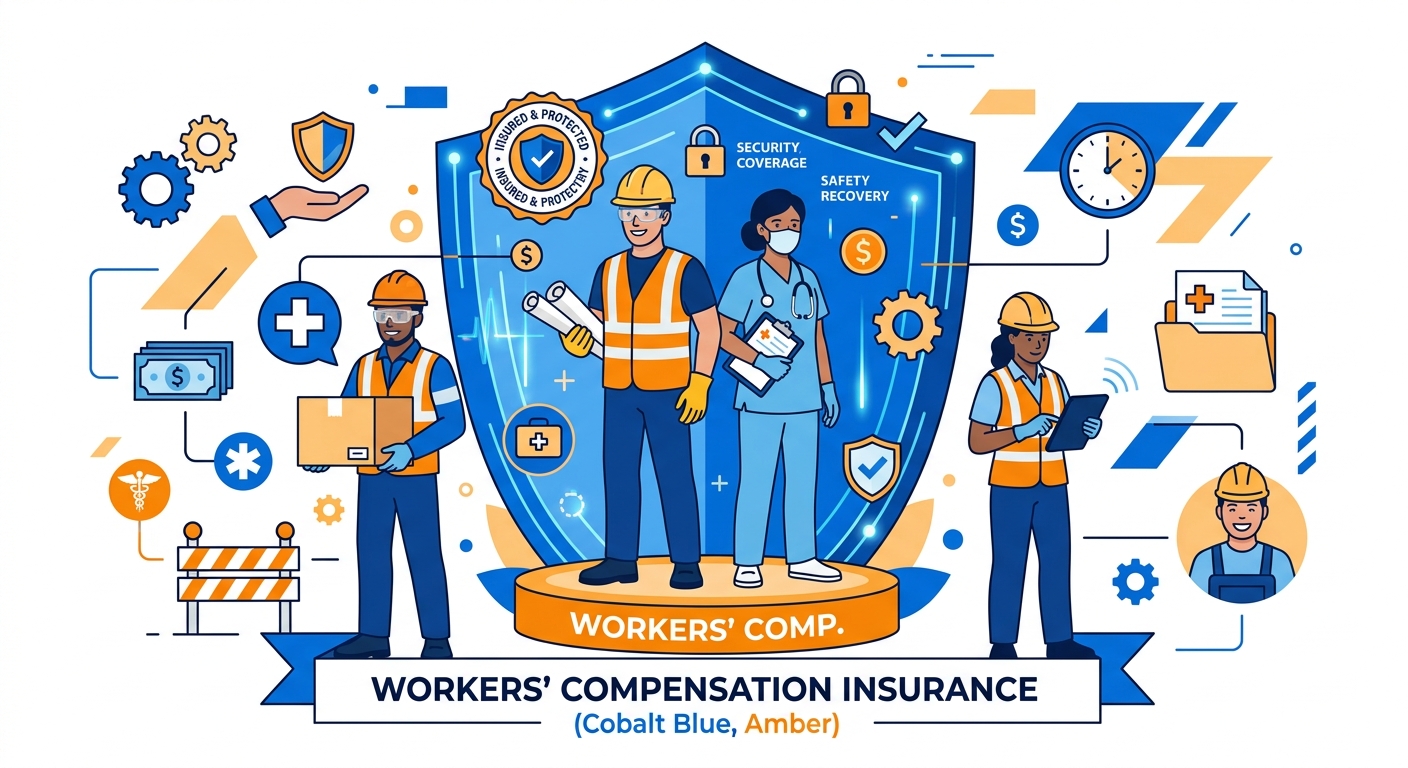
What workers comp covers
Workers comp questions
Is workers comp required by law?
In 48 states, yes — if you have employees. Texas and South Dakota allow opt-out, but most businesses shouldn't. Requirements vary by state, industry, and number of employees.
What if I only have 1-2 employees?
Most states have no minimum — even one employee may trigger the requirement. Some states exempt domestic workers or agricultural workers. We'll check your specific state requirements.
Do I need workers comp for subcontractors?
If a subcontractor doesn't carry their own workers comp, many states treat them as your employees. Require certificates of insurance from all subs — or carry coverage for them.
How is workers comp priced?
Based on your payroll times a rate per $100 of payroll that varies by job classification. Roofers pay much more than office workers. Your Experience Modification Rate (EMR) adjusts for your claims history.