How insurance actually works
Insurance is essentially a financial safety net built on a simple concept: spread risk across a large group so that no single person faces catastrophic loss alone. Here's the mechanics, explained simply.
The 4-step insurance cycle
You pay a premium
A premium is the price you pay for insurance coverage — monthly or annually. The amount reflects the probability and cost of potential losses in your risk category.
Your premium joins a risk pool
Thousands of businesses like yours pay premiums. The carrier pools this money together. Most businesses won't have claims — their premiums fund claims for those who do.
A covered incident occurs
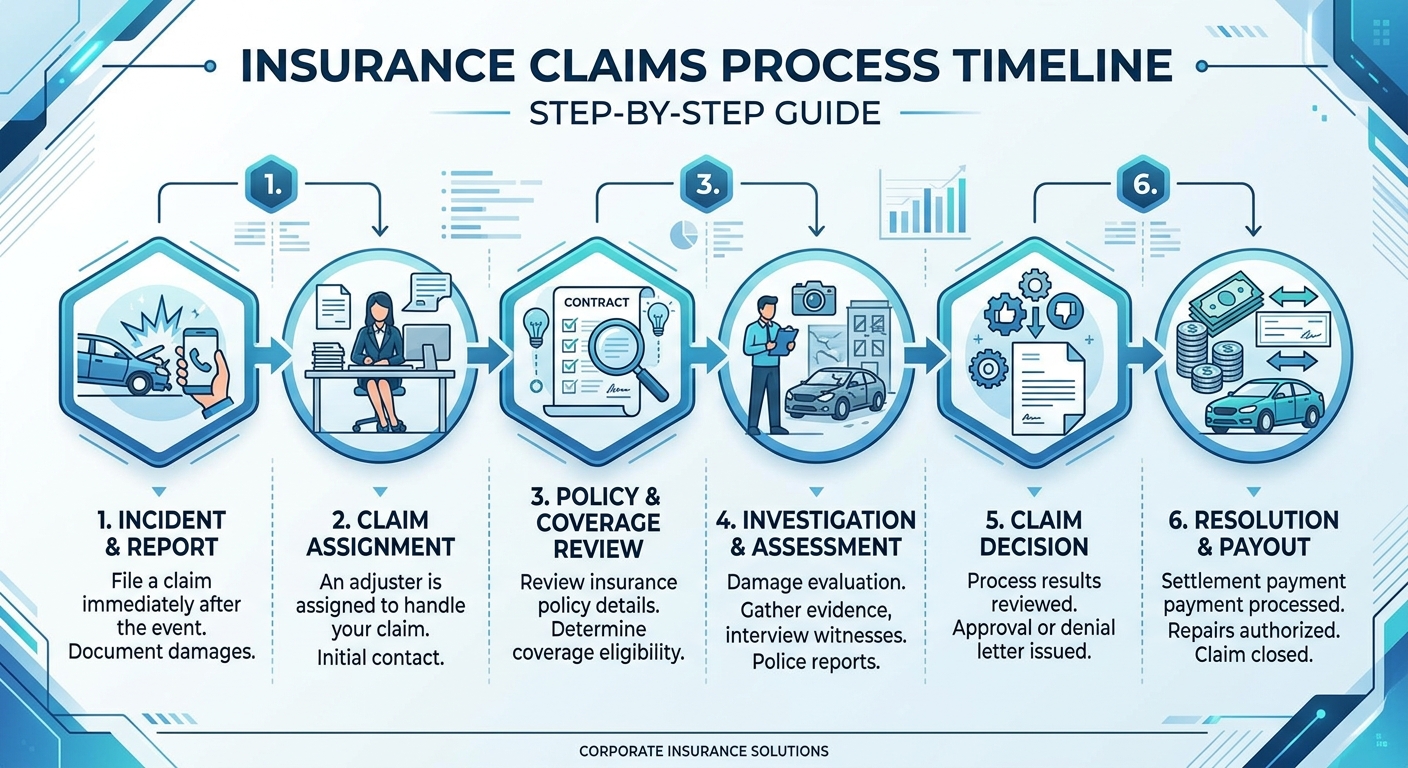
When something bad happens — a lawsuit, a fire, an employee injury — you file a claim. The insurer investigates and confirms the loss is covered by your policy.
The carrier pays the claim
After confirming coverage, the carrier pays your claim (minus your deductible). They may pay medical bills directly, issue settlement checks, or fund your legal defense.
Key terms you need to know
Now that you understand insurance, let's find the right coverage
Free quote. No jargon. Same-day response.
Get Free Quote